
Speech & Language Therapy
Our Speech & Language Therapy program supports children in developing communication, listening, language understanding, speech clarity, and social communication through personalized therapy sessions.
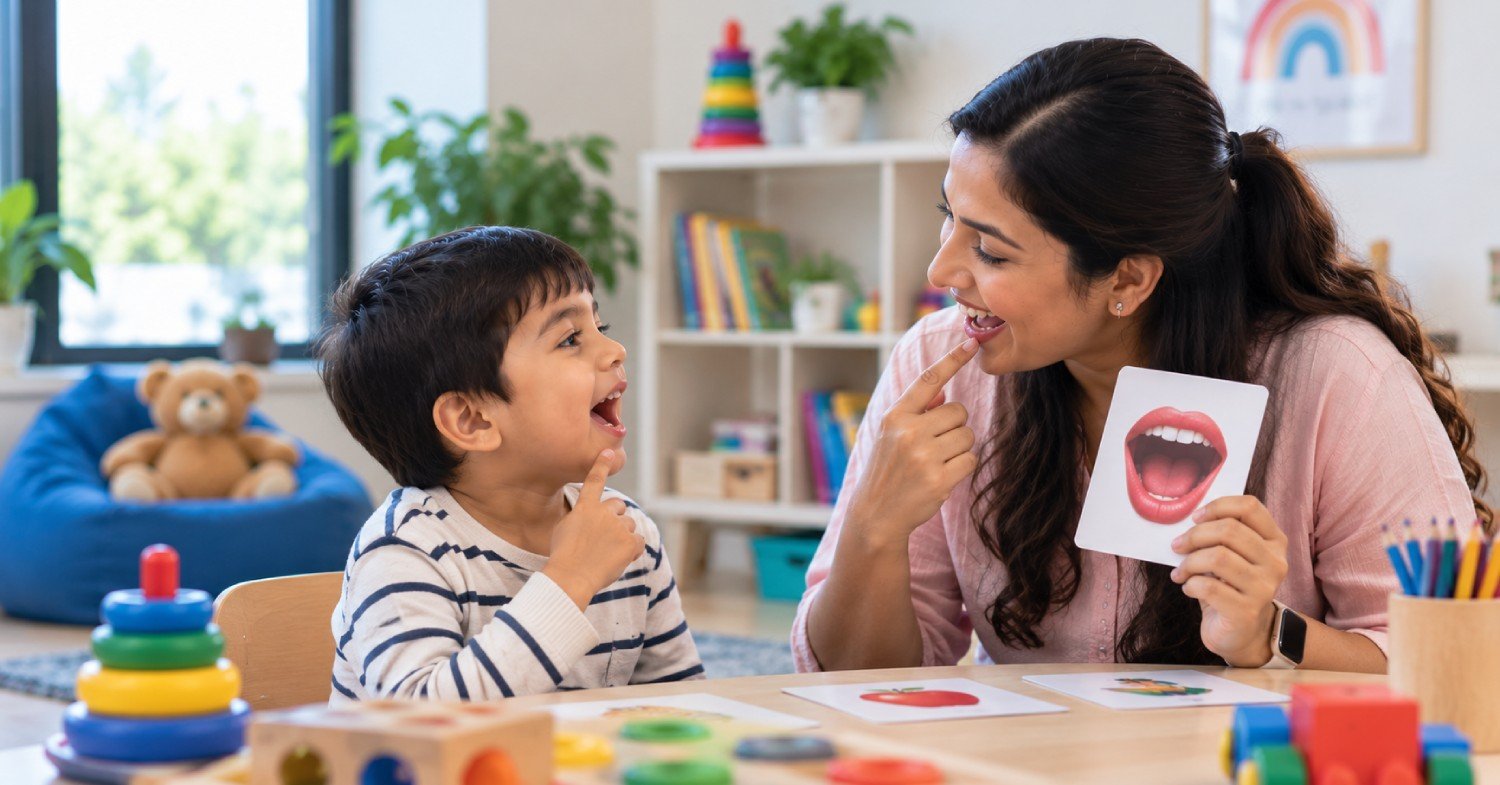
Helping children communicate with confidence, build meaningful relationships, and express themselves in everyday life.
Book a Service Enquiry
Tell us a little about the child and we'll guide you.
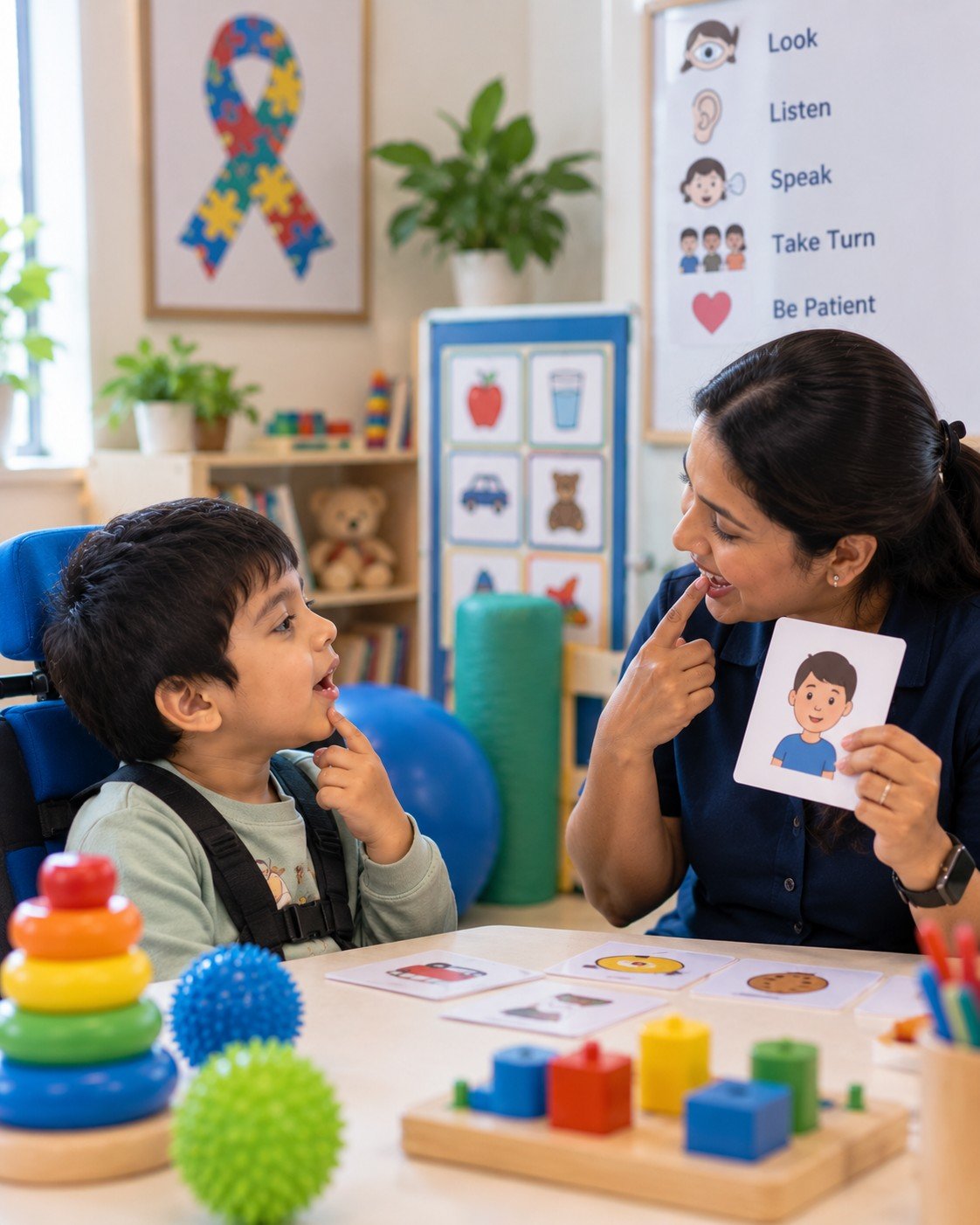
Personalized Communication Support
Therapy goals are planned around the child's communication abilities, strengths, needs, and developmental stage.
Helping Every Child Find Their Voice
Personalized support for communication, language development, confidence, and everyday interaction.
Communication plays an important role in learning, relationships, independence, and everyday participation. When a child experiences difficulty with speech or language, the right support can help make communication easier and more meaningful.
Our therapists use child-friendly activities, structured practice, play-based learning, and individualized goals to support speech and language development in a comfortable environment.
Families are also guided with practical strategies that can be used at home so children can continue practicing communication skills in familiar and everyday situations.
Quick Facts
Important information about Speech & Language Therapy.
Therapy recommendations are personalized after understanding the child's communication abilities and developmental needs.
45-60 Minutes
Session Duration
Early Childhood & Beyond
Suitable Age
Individualized
Therapy Plan
Encouraged
Parent Participation
Program Highlights
Key communication areas supported during therapy.
Therapy sessions are designed around practical communication goals that children can use at home, at school, and in social situations.
Speech Development
Language Skills
Social Communication
Communication Confidence
Listening Skills
Language Understanding
Key Benefits
How speech and language support can contribute to everyday development.
With regular practice and family involvement, children can build stronger communication skills and become more comfortable expressing themselves in everyday situations.
Supports Speech Clarity
Builds Vocabulary
Strengthens Listening
Encourages Social Interaction
Supports Learning
Builds Communication Confidence
Reduces Communication Frustration
Encourages Independent Expression
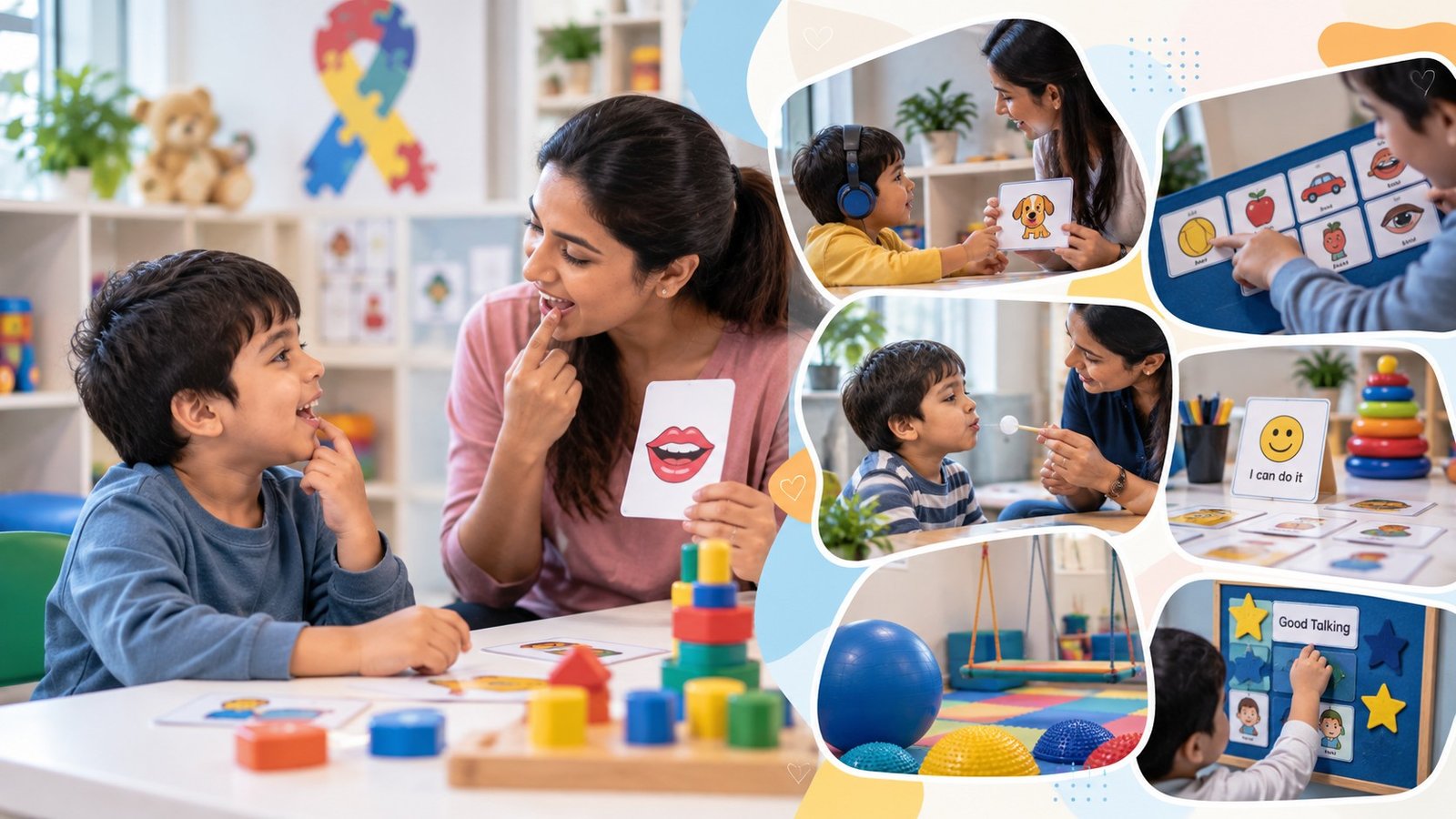
Our Focus Areas
Practical communication skills children can use in everyday life.
Every session is planned around meaningful communication goals that can be practiced at home, in school, and during social interaction.
Our Therapy Process
A structured and child-friendly approach designed around individual needs.
The therapy process begins by understanding the child's current abilities and continues with personalized goals, regular practice, family guidance, and progress review.
Initial Assessment
Understanding the child's communication strengths, challenges, developmental level, and current needs.
Goal Planning
Creating practical communication goals that are appropriate for the child's age and developmental stage.
Therapy Sessions
Using interactive activities to practice speech, language, listening, understanding, and communication.
Home Support
Sharing simple strategies that parents can use to reinforce communication skills at home.
Learning Activities
Engaging activities that make communication practice enjoyable.
Children often learn best through meaningful interaction and play. Activities are selected according to the child's age, interests, communication goals, and comfort level.
Interactive Games
Story Reading
Speech Practice
Conversation Activities
Picture Communication
Social Activities
Role Play
Rhymes & Songs
Who Can Benefit?
Children who may benefit from additional speech and communication support.
Speech and language therapy may be helpful for children experiencing difficulties with speech, language, communication, understanding, or social interaction.
Expected Outcomes
Areas where children may experience meaningful progress through consistent support.
Every child's development is unique. Progress can vary based on individual needs, consistency, participation, and the goals established during assessment.
Frequently Asked Questions
Answers to common questions parents may have before starting speech therapy.
If you have additional questions, our team can discuss your child's individual needs during an assessment or consultation.
" alt="Speech & Language Therapy" class="w-full rounded-[32px] object-cover shadow-xl">
If you notice concerns with speech, language, understanding, or communication, it is helpful to discuss them with a qualified professional. Early support can help address communication needs sooner.
Session duration may vary depending on the child's age, attention, assessment findings, and therapy goals. Sessions commonly range from 45 to 60 minutes.
Parent participation is encouraged whenever appropriate. Families can learn strategies that help children practice communication skills outside the therapy setting.
Frequency is decided according to the child's assessment, goals, availability, and overall support plan. The therapist can recommend a suitable schedule.
Progress is reviewed against the child's individual goals through observation, therapy activities, regular communication with parents, and ongoing assessment.
Yes. Parents may receive simple communication activities and strategies that can be practiced naturally during everyday routines.
Start Your Child's Communication Journey
Take the first step towards better communication, confidence, and everyday participation.
Our team is here to understand your child's communication needs and guide you towards appropriate support. Book a session or assessment to discuss the next step for your child.
Book a Session
Share a few details and our team will get in touch with you.