
Occupational Therapy
Our Occupational Therapy program helps children develop the skills they need to participate more comfortably in play, learning, self-care, school activities, and everyday routines.
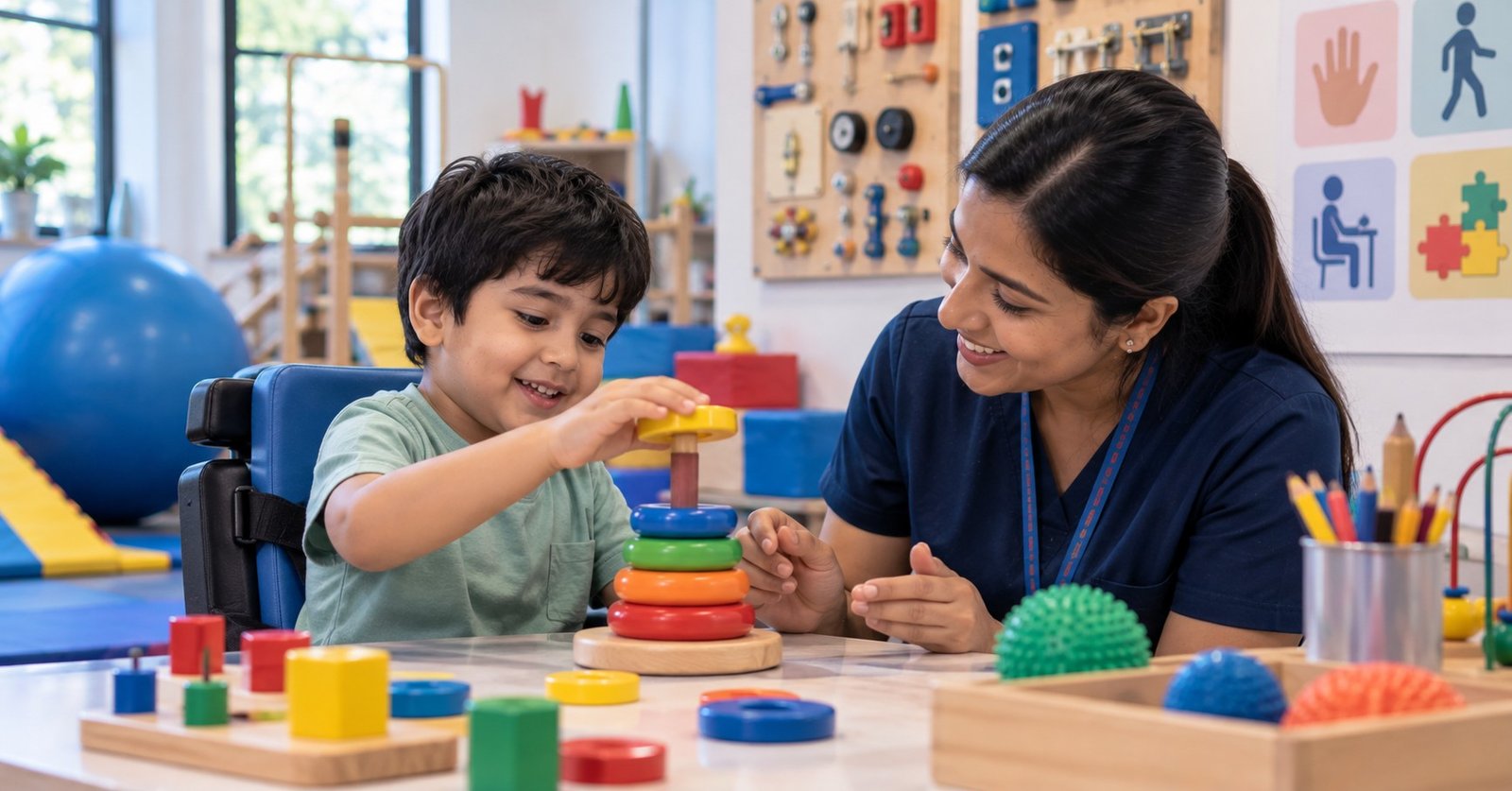
Building motor skills, sensory regulation, coordination, confidence, and independence through meaningful activities.
Book a Service Enquiry
Tell us a little about the child and we'll guide you.
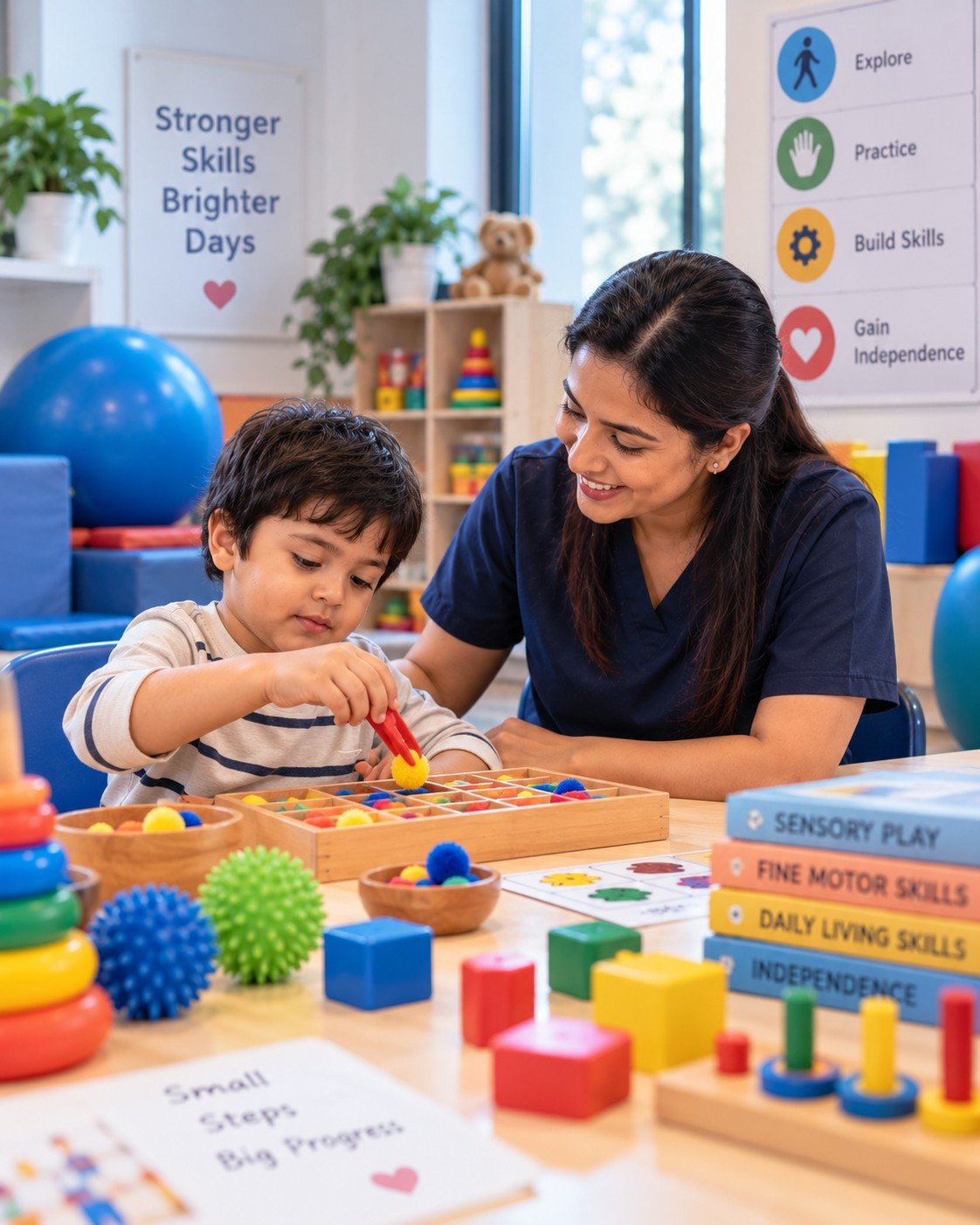
Everyday Independence
Therapy focuses on practical skills that help children participate more confidently in everyday activities.
Building Skills for Everyday Life
Personalized therapy that helps children participate, learn, play, and become more independent.
Occupational Therapy focuses on practical skills that children use every day, including movement, coordination, play, self-care, attention, classroom participation, and sensory regulation.
Our therapists use age-appropriate activities and structured play to help children practice these skills in a supportive and engaging environment.
Therapy goals are developed around the child's individual abilities and the activities that matter most to the child and family.
Quick Facts
Important information about Occupational Therapy.
Occupational Therapy plans are personalized according to the child's motor, sensory, developmental, and everyday participation needs.
45-60 Minutes
Session Duration
Child-Centered
Approach
Motor & Daily Living
Skill Areas
Encouraged
Family Participation
Program Highlights
Core areas supported through Occupational Therapy.
Activities are selected to help children develop practical skills for play, school, self-care, and daily routines.
Fine Motor Skills
Gross Motor Skills
Attention & Participation
Hand Coordination
Body Awareness
Daily Living Skills
Key Benefits
How Occupational Therapy can support everyday participation.
Regular practice can help children become more comfortable and confident while completing age-appropriate activities at home, in school, and in the community.
Improves Fine Motor Skills
Supports Coordination
Supports Writing Readiness
Improves Task Participation
Builds Self-Care Skills
Supports Body Awareness
Supports Classroom Activities
Builds Independence
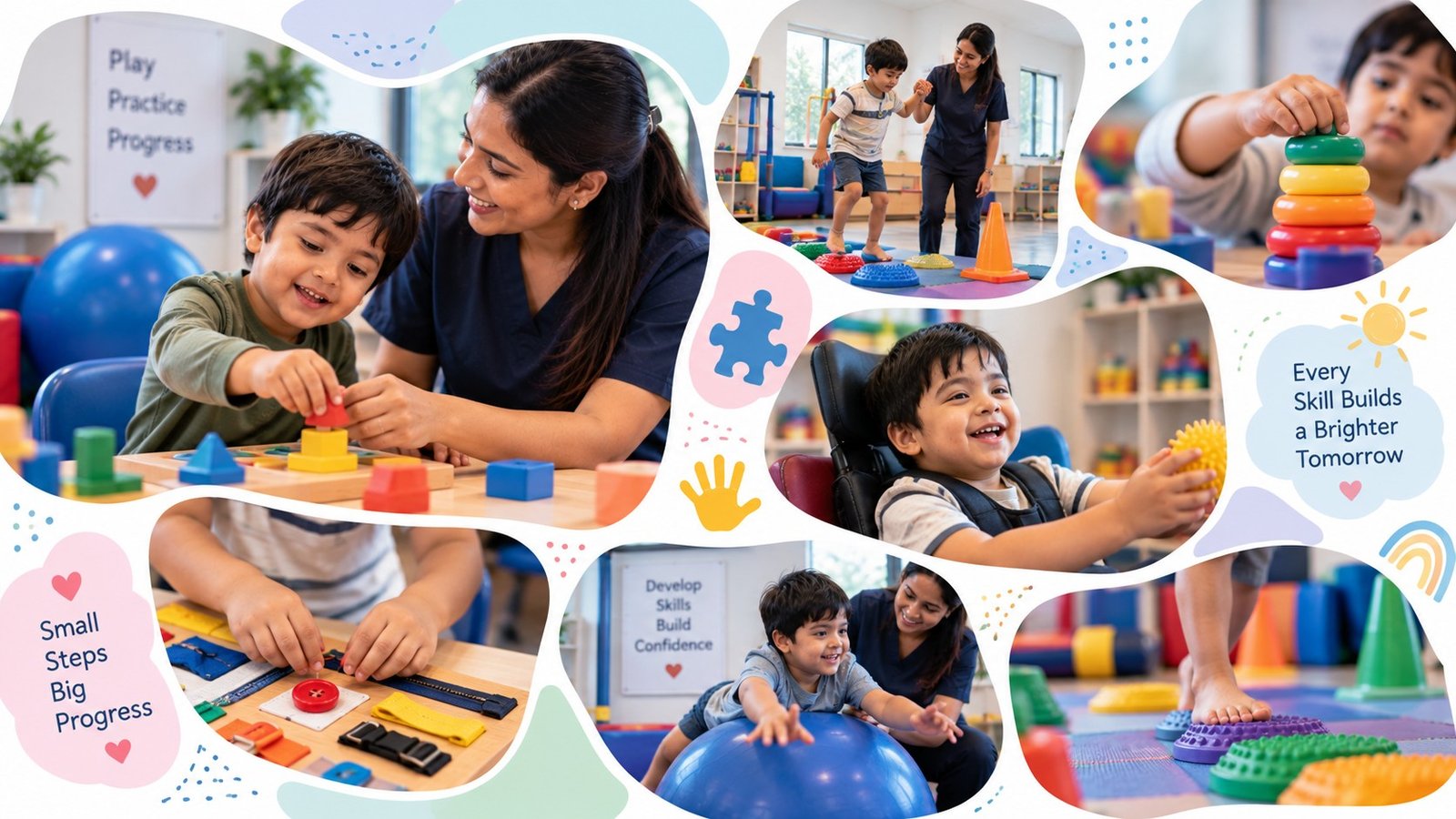
Our Focus Areas
Practical skills for learning, play, self-care, and participation.
Every child has different strengths and challenges. Therapy focuses on the skills that are most meaningful for the child's daily life and development.
Our Therapy Process
A structured approach focused on practical developmental goals.
Therapy begins with understanding the child's current abilities and continues with personalized activities, regular practice, family guidance, and progress review.
Initial Assessment
Understanding motor skills, sensory needs, participation, self-care abilities, and developmental priorities.
Goal Planning
Selecting practical goals that are meaningful for the child's home, school, and daily routines.
Skill Practice
Using structured play and activities to practice motor, coordination, attention, and daily living skills.
Family Support
Sharing simple strategies that families can use during everyday routines.
Therapy Activities
Play-based activities that support practical skill development.
Children are encouraged to learn through movement, play, exploration, and meaningful activities that match their developmental level.
Puzzles & Matching
Drawing & Pre-Writing
Fine Motor Games
Movement Activities
Shape & Sorting Games
Building Activities
Self-Care Practice
Attention Activities
Who Can Benefit?
Children who may benefit from additional occupational and developmental support.
Occupational Therapy may support children who experience difficulties with motor skills, coordination, sensory regulation, self-care, attention, or everyday participation.
Expected Outcomes
Areas where children may work towards greater participation and independence.
Every child's progress is unique. Goals and outcomes depend on individual abilities, therapy consistency, participation, and developmental needs.
Frequently Asked Questions
Answers to common questions about Occupational Therapy.
Our team can discuss your child's specific needs and recommend appropriate support during an assessment.
" alt="Occupational Therapy" class="w-full rounded-[32px] object-cover shadow-xl">
Occupational Therapy can support motor skills, coordination, sensory regulation, attention, self-care, school participation, and other everyday activities.
Yes. Occupational Therapy may help children with autism develop practical motor, sensory, self-care, participation, and independence skills.
Activities may include puzzles, building games, drawing, movement exercises, fine motor tasks, sensory activities, self-care practice, and other age-appropriate activities.
Session duration may vary depending on the child's age, goals, assessment, and attention level. Sessions commonly range from 45 to 60 minutes.
Yes. Families can receive practical guidance for incorporating useful skills into everyday routines.
Progress is reviewed by observing the child's participation and skills against individual therapy goals and discussing development with parents.
Help Your Child Build Everyday Independence
Let's understand your child's needs and plan meaningful developmental support.
Our Occupational Therapy team can help identify practical goals that support your child's movement, participation, self-care, learning, and everyday confidence.
Book a Session
Share a few details and our team will get in touch with you.