
Behavioral Therapy
Our Behavioral Therapy program uses individualized goals and structured, child-friendly activities to understand behavior, encourage positive responses, and build practical skills for everyday life.
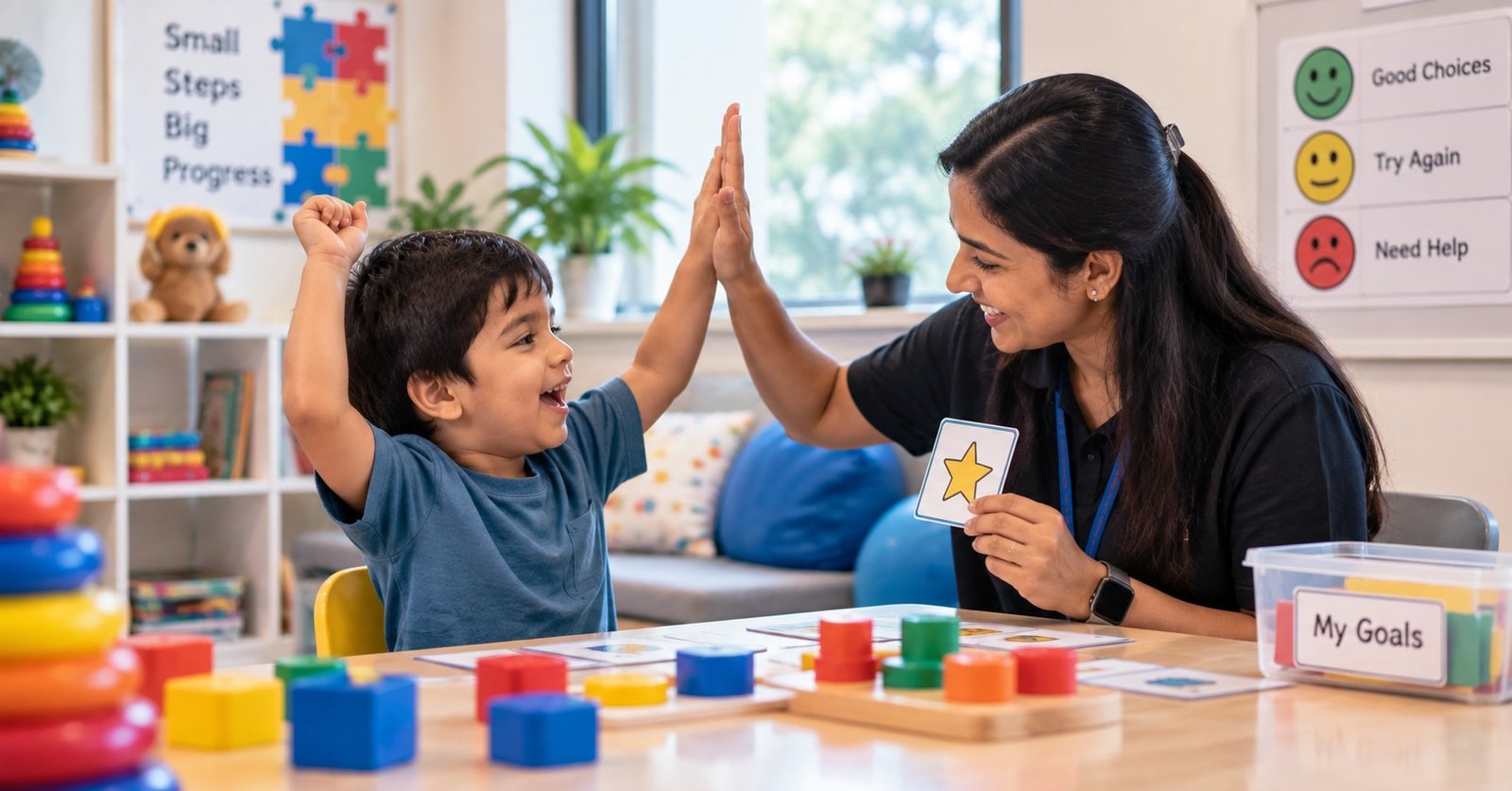
Helping children develop positive behaviors, emotional regulation, learning readiness, and everyday independence.
Book a Service Enquiry
Tell us a little about the child and we'll guide you.
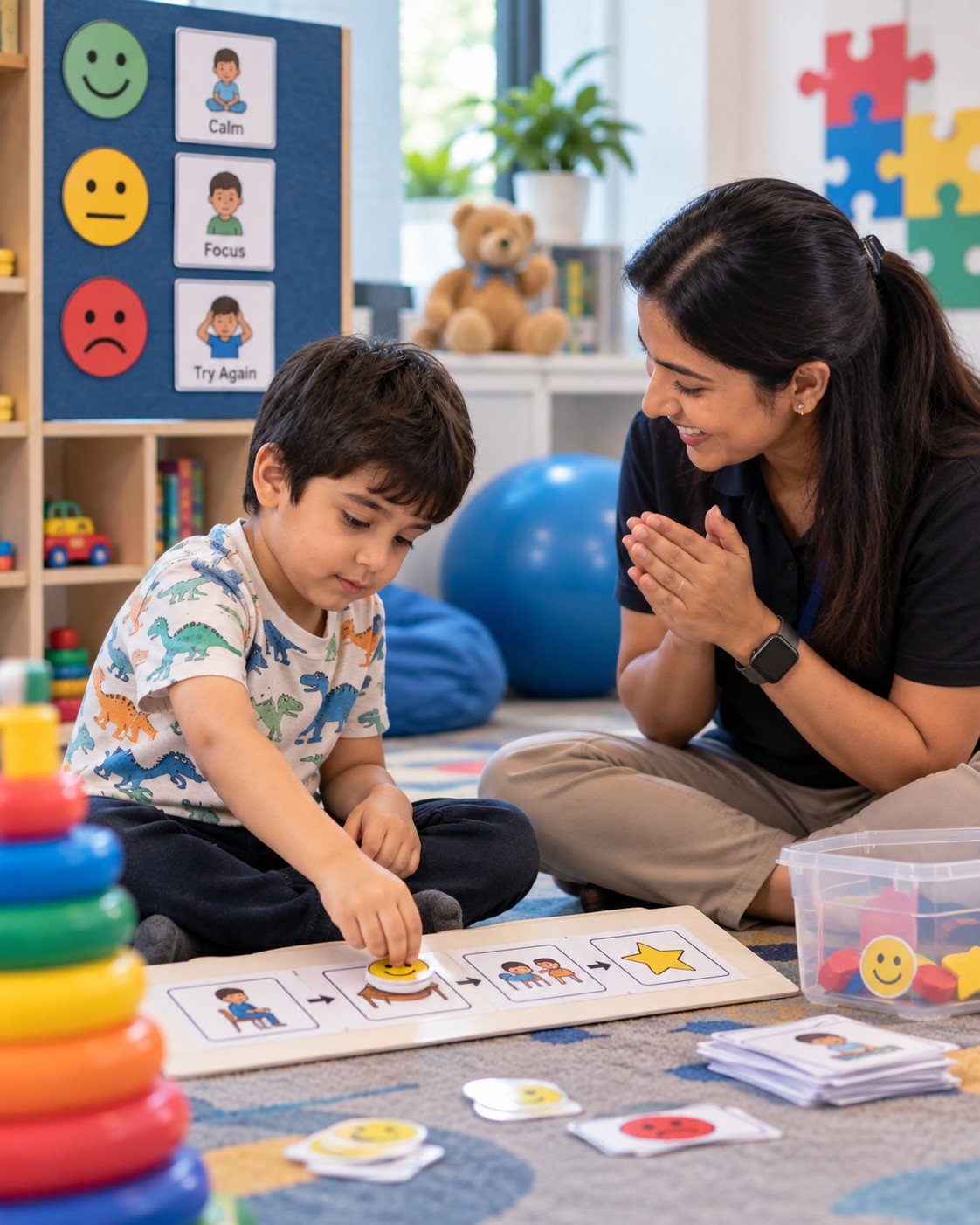
Child-Centered Support
Behavioral goals are planned according to the child's individual needs, abilities, environment, and daily routines.
Building Positive Everyday Skills
Supporting children with practical strategies that make learning, communication, and daily routines easier.
Children communicate their needs and emotions in different ways. Sometimes behavior can be a way of expressing discomfort, frustration, difficulty understanding a situation, or needing support.
Our behavioral therapy approach focuses on understanding the child, identifying patterns, teaching useful replacement skills, and encouraging positive behaviors in a supportive environment.
Parents are included in the process so that strategies can be carried over into home routines, school environments, and everyday activities.
Quick Facts
Important information about Behavioral Therapy.
Behavioral support is individualized and may focus on communication, emotional regulation, learning readiness, social participation, and everyday routines.
45-60 Minutes
Session Duration
Individualized
Approach
Skill Focused
Goals
Encouraged
Family Support
Program Highlights
Core areas supported through behavioral intervention.
The program focuses on practical skills that can help children participate more comfortably and independently in daily activities.
Positive Behavior
Emotional Regulation
Functional Communication
Attention & Engagement
Following Routines
Independence Skills
Key Benefits
How individualized behavioral support can help children and families.
Consistent support can help children understand expectations, develop useful skills, communicate their needs, and participate more confidently in everyday routines.
Encourages Positive Behavior
Supports Emotional Regulation
Improves Functional Communication
Builds Attention Skills
Supports Daily Routines
Builds Confidence
Supports Home Participation
Encourages Learning Readiness
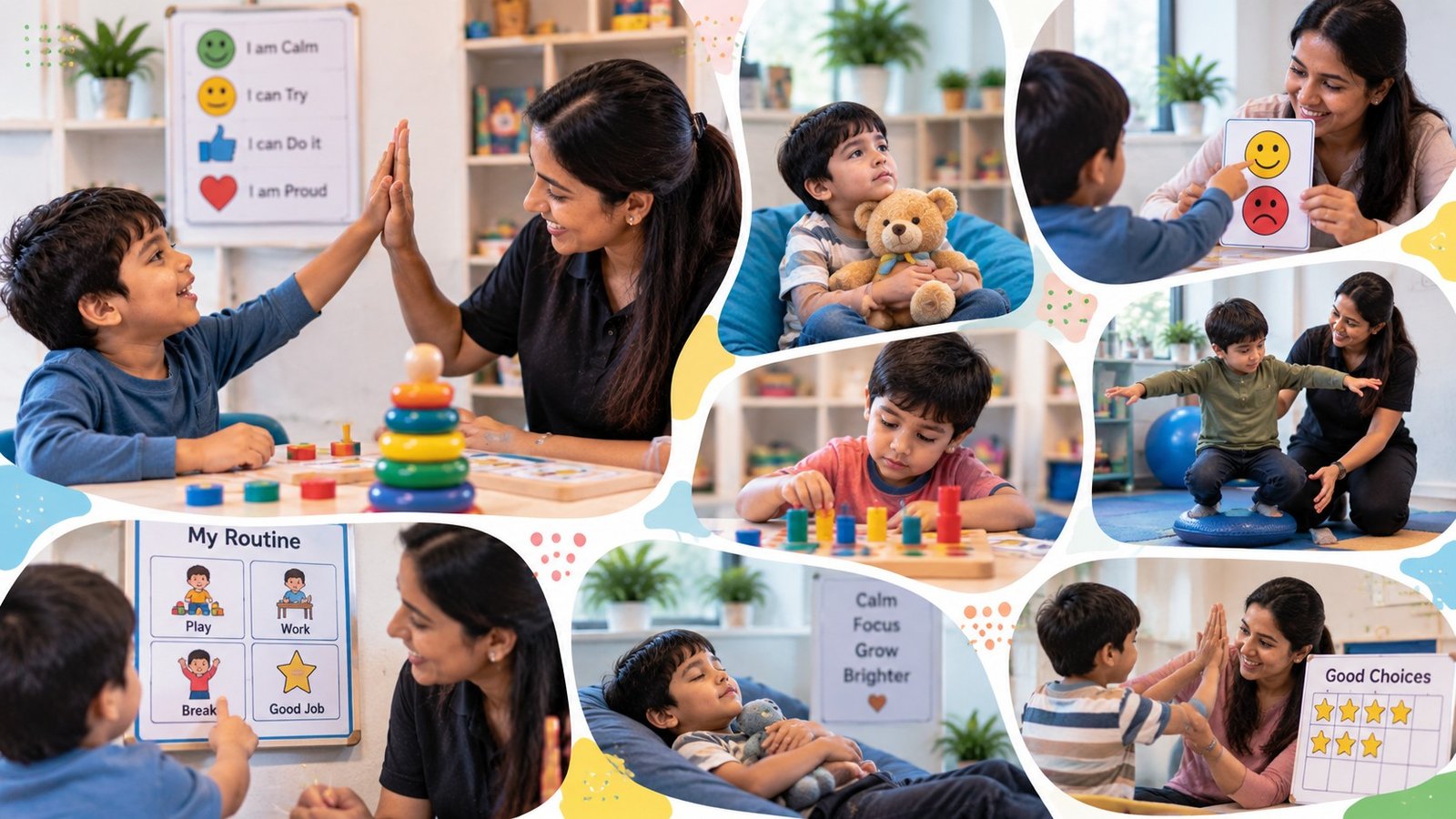
Our Focus Areas
Practical skills that support positive participation.
Therapy goals are selected according to the child's needs and may be practiced through structured activities, play, communication, routines, and everyday situations.
Our Therapy Process
A supportive process focused on understanding, teaching, practicing, and reviewing.
The therapy process is designed to understand the child's needs first and then build practical goals that can be practiced consistently across different environments.
Understand Needs
Understanding behavior patterns, communication needs, routines, strengths, and areas requiring support.
Set Goals
Creating practical goals that are meaningful for the child and relevant to everyday life.
Teach Skills
Using structured activities and positive teaching strategies to introduce useful replacement skills.
Practice & Review
Working with families to practice strategies and review progress over time.
Therapy Activities
Engaging activities that make skill development practical and enjoyable.
Activities are selected according to the child's goals, age, interests, attention level, and developmental needs.
Structured Games
Routine Practice
Communication Practice
Problem Solving
Emotion Activities
Social Activities
Daily Living Practice
Positive Reinforcement
Who Can Benefit?
Children who may benefit from additional behavioral and developmental support.
Behavioral therapy may support children who experience challenges with communication, emotional regulation, routines, learning readiness, social interaction, or everyday participation.
Expected Outcomes
Areas where children may work towards meaningful progress.
Progress is individual and depends on the child's needs, consistency, participation, environment, and therapy goals.
Frequently Asked Questions
Answers to common questions about Behavioral Therapy.
Every child is different. Our team can discuss your child's specific needs and goals during a consultation.
" alt="Behavioral Therapy" class="w-full rounded-[32px] object-cover shadow-xl">
Behavioral Therapy helps children understand and develop useful behaviors and skills through structured, supportive teaching and individualized goals.
No. Behavioral support can be useful for children with a range of developmental, communication, learning, emotional, or behavioral needs.
Yes. Parent involvement is encouraged so that useful strategies can be practiced consistently at home and during everyday routines.
Goals are based on the child's current abilities, developmental needs, family priorities, and practical everyday situations.
Therapists observe the child's skills and participation, review individual goals, and communicate progress with parents.
Yes. Functional communication can be an important part of behavioral support, especially when children have difficulty expressing needs, feelings, or choices.
Support Positive Progress
Let's understand your child's needs and plan the right support.
Our team works with children and families to build practical skills that support communication, learning, emotional regulation, and everyday participation.
Book a Session
Share a few details and our team will get in touch with you.