Social Skills Training
Our Social Skills Training program gives children structured and supportive opportunities to practice communication, turn-taking, sharing, cooperation, conversation, and social participation.
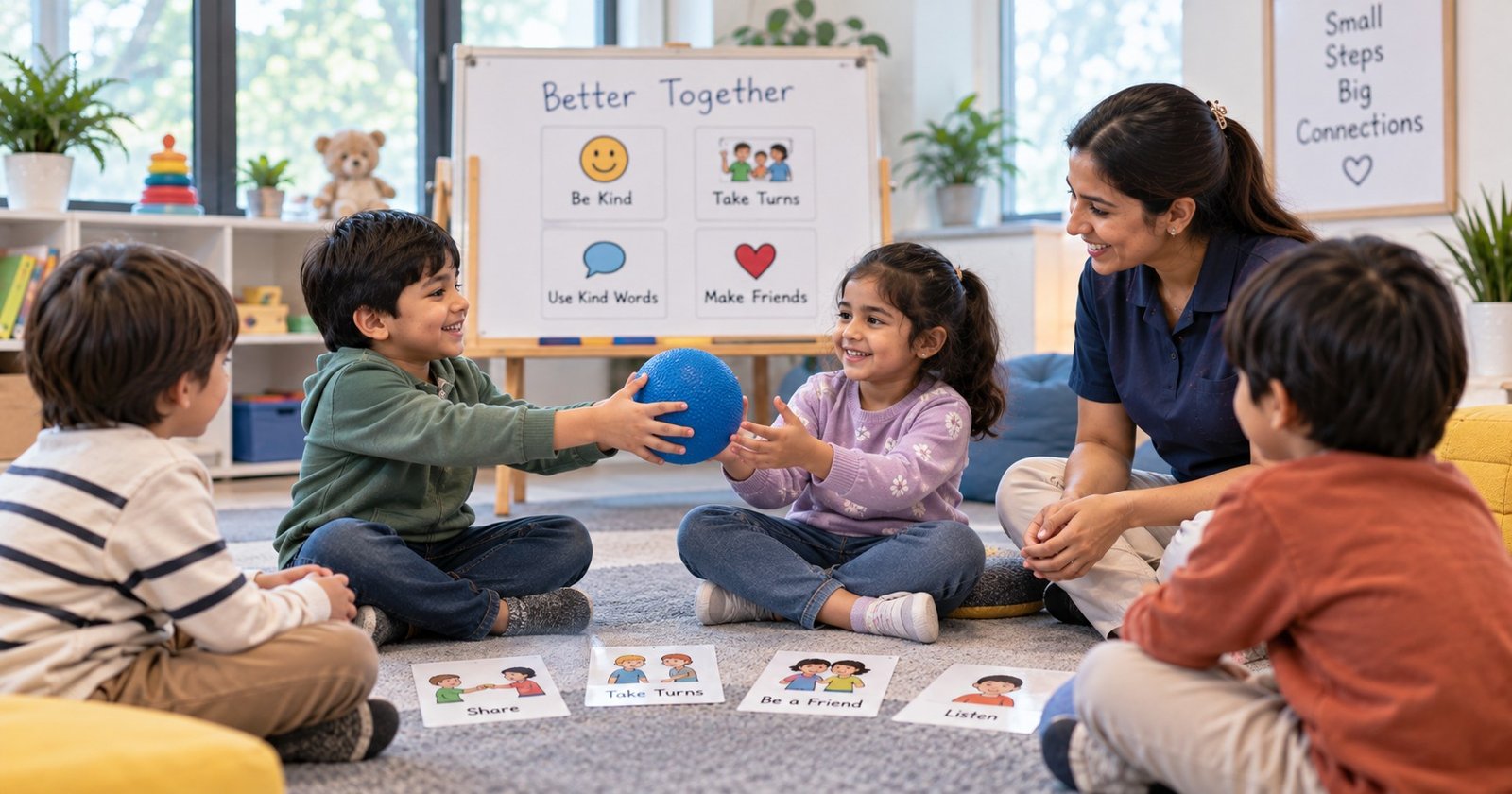
Helping children build confidence, communication, cooperation, and meaningful social connections.
Book a Service Enquiry
Tell us a little about the child and we'll guide you.
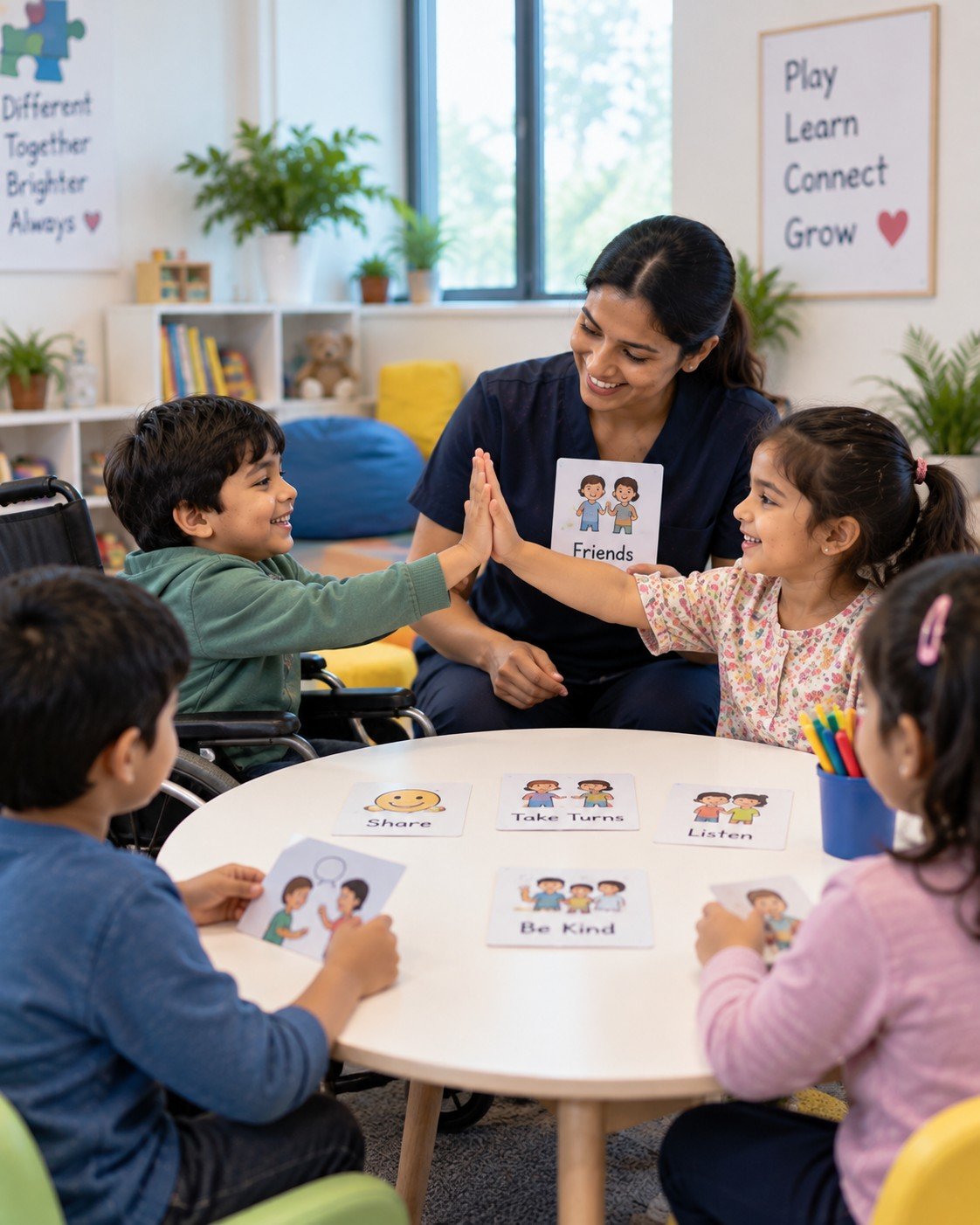
Learning Through Interaction
Children practice social skills through meaningful activities that encourage communication, cooperation, confidence, and participation.
Learning to Connect, Communicate & Participate
Supporting children as they learn practical skills for friendships, group activities, school, and everyday interaction.
Social interaction involves many small skills, from noticing another person and taking turns to starting a conversation, sharing an activity, understanding simple social cues, and responding appropriately.
Our social skills sessions use structured activities, role play, games, stories, guided interaction, and group experiences to give children opportunities to practice these skills in a supportive environment.
Children are encouraged at their own pace, with goals selected according to their communication abilities, developmental stage, and social needs.
Quick Facts
Important information about Social Skills Training.
Social goals are individualized and may be practiced through one-to-one, paired, or small-group activities.
Individual & Group
Session Format
Social Participation
Focus
Practical
Communication
Encouraged
Family Support
Program Highlights
Core social skills practiced during sessions.
Children learn through structured interaction, games, role play, stories, and guided group activities.
Conversation Skills
Turn Taking
Sharing
Group Participation
Emotion Awareness
Social Confidence
Key Benefits
How social skills practice can support everyday interaction.
Consistent practice can help children become more comfortable participating in social situations and using communication skills with others.
Builds Conversation Skills
Encourages Turn Taking
Supports Sharing
Encourages Group Participation
Builds Social Confidence
Supports Friendship Skills
Improves Social Understanding
Supports Classroom Participation
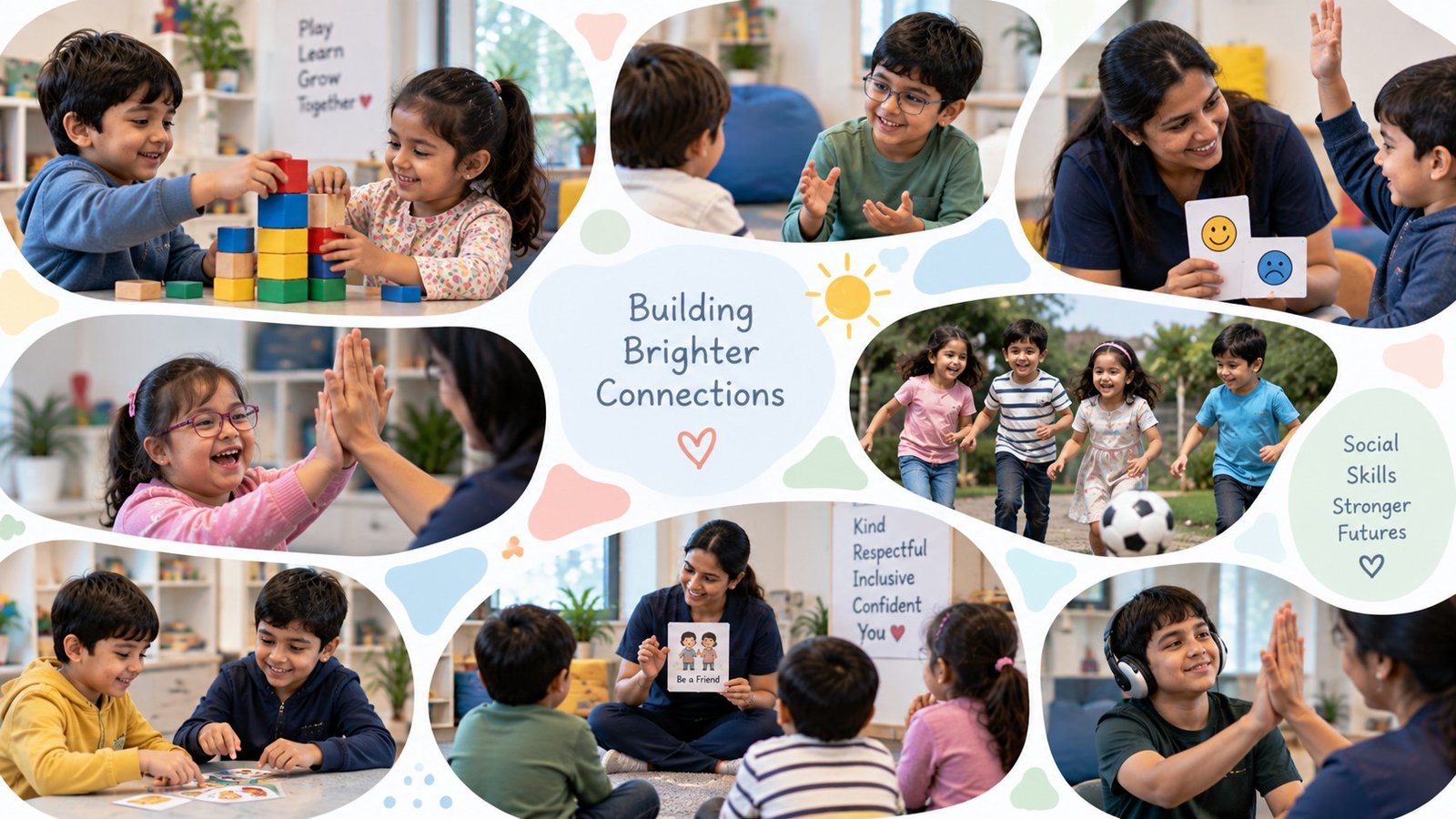
Our Focus Areas
Practical skills for positive social participation.
Children practice social skills in situations that are relevant to home, school, community, and peer interaction.
Our Training Process
A gradual approach that helps children practice social skills comfortably.
Children begin with skills that match their current abilities and gradually practice them in more interactive and natural situations.
Understand Social Needs
Understanding communication abilities, social strengths, challenges, interests, and participation needs.
Set Social Goals
Choosing practical social goals that are meaningful for the child's everyday environment.
Practice Together
Using games, role play, guided interaction, and group activities to practice social skills.
Use Skills Everyday
Helping families encourage social communication and participation during daily activities.
Social Learning Activities
Fun activities that create opportunities for meaningful interaction.
Children learn social skills through practice, repetition, play, and positive interaction with adults and peers.
Interactive Games
Group Play
Conversation Practice
Emotion Games
Role Play
Sharing Activities
Turn-Taking Games
Social Stories
Who Can Benefit?
Children who may benefit from additional social communication support.
Social Skills Training may support children who experience difficulty with communication, peer interaction, group participation, turn taking, sharing, or understanding everyday social situations.
Expected Outcomes
Areas where children may work towards more confident social participation.
Social development is individual. Progress depends on communication abilities, practice, consistency, environment, and the child's personal goals.
Frequently Asked Questions
Common questions about Social Skills Training.
Our team can help identify appropriate social goals based on the child's communication and developmental needs.
" alt="Social Skills Training" class="w-full rounded-[32px] object-cover shadow-xl">
Social Skills Training helps children practice communication, interaction, cooperation, turn taking, sharing, and other skills needed for everyday social participation.
Yes. Social Skills Training can support children with autism who experience challenges with social communication and interaction.
The format depends on the child's goals and needs. Children may practice skills individually, with a partner, or in a small group.
Activities may include games, role play, social stories, conversation practice, sharing, turn-taking, group activities, and guided peer interaction.
Yes. Parents can encourage social skills naturally through family games, conversations, shared activities, and everyday routines.
Progress is reviewed according to individual social goals, participation, communication, interaction, and the child's ability to use skills in different situations.
Help Your Child Build Meaningful Connections
Give your child opportunities to practice communication, confidence, and social participation.
Our team can help identify practical social goals and create supportive opportunities for your child to learn, interact, participate, and connect with others.
Book a Session
Share a few details and our team will get in touch with you.